
Leg swelling is common, but that does not mean it should always be ignored.
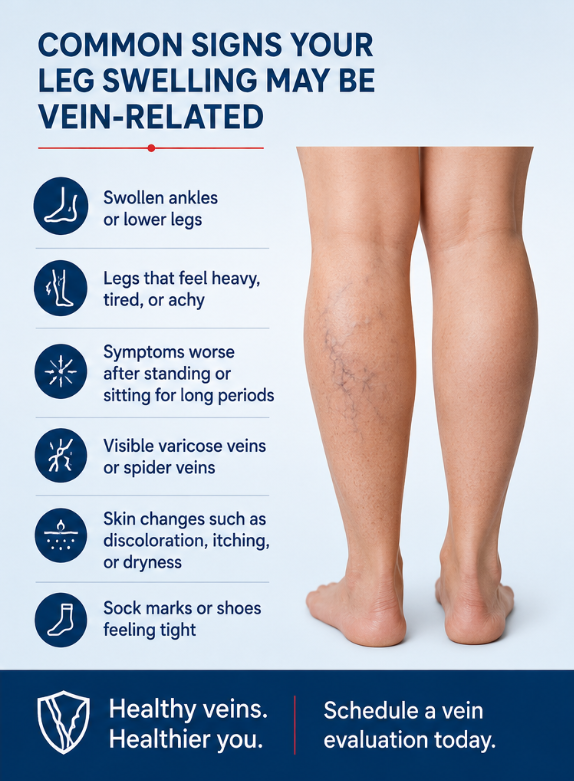
Maybe your ankles look normal when you wake up but become noticeably swollen by the end of the day. Perhaps your shoes feel tighter after standing for several hours. You may notice sock marks around your ankles, heaviness in your legs, aching, visible veins, or swelling that seems to keep coming back.
Sometimes leg swelling is temporary and related to prolonged sitting, standing, travel, diet, pregnancy, an injury, or certain medications. In other cases, persistent swelling can be a sign that the veins in your legs are having difficulty returning blood back toward your heart.
One possible cause is chronic venous insufficiency, also called CVI or venous reflux.
Understanding the difference between occasional swelling and symptoms of an underlying vein problem can help you know when it may be time to seek medical evaluation.
What Causes Leg Swelling?
Leg swelling occurs when excess fluid collects in the tissues of the legs, ankles, or feet. The medical term for this type of swelling is edema.
Edema can occur for many different reasons. Cleveland Clinic notes that potential causes can include prolonged sitting or standing, pregnancy, medications, excess dietary sodium, injuries, venous insufficiency, blood clots, and conditions involving the heart, kidneys, liver, or other body systems.
Because there are many potential causes, recurring or unexplained swelling should not automatically be assumed to be a vein problem.
However, when swelling occurs primarily in the lower legs and ankles—especially when it becomes worse after standing or sitting for extended periods—your veins may be contributing to the problem.
How Your Leg Veins Normally Work
Your veins have an important job.
After your arteries deliver oxygen-rich blood to the tissues throughout your body, your veins carry blood back toward your heart.
Getting blood out of your legs requires your circulatory system to work against gravity.
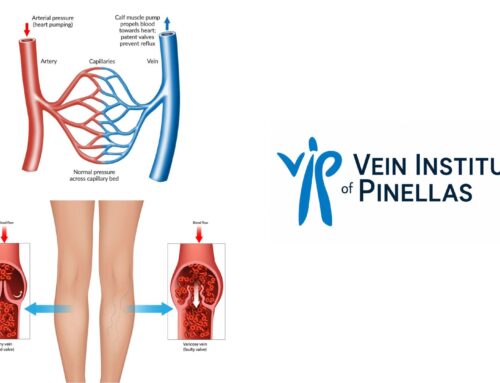
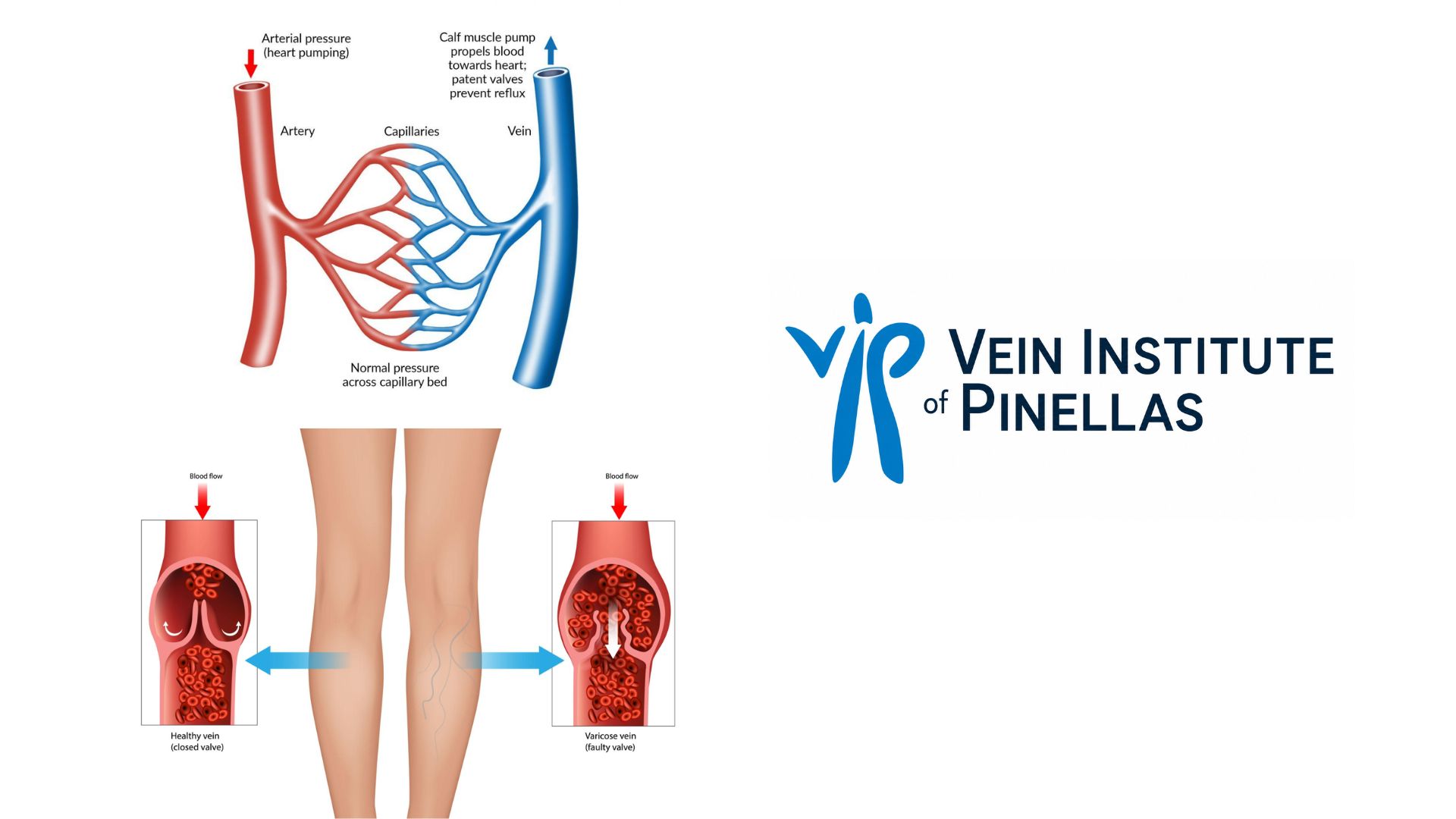
Small one-way valves inside the leg veins help accomplish this. These valves are designed to open as blood moves upward toward the heart and close to prevent blood from flowing backward.
Movement also helps.
When you walk, the muscles in your calves contract and help push blood upward through the veins. This is sometimes described as the calf muscle pump.
When the vein valves and calf muscles are working properly, blood continues moving upward rather than collecting in the lower legs.
Problems can develop when those valves weaken or become damaged.
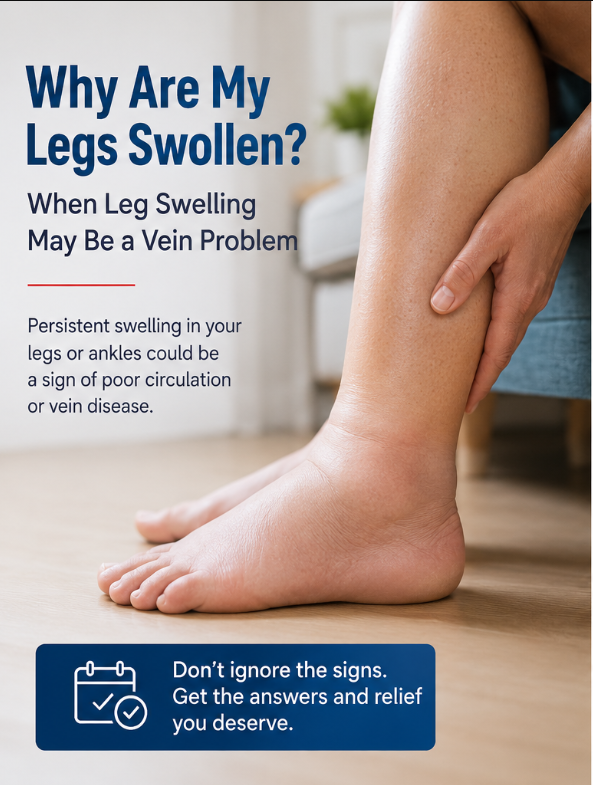
leg swelling -1
How Venous Insufficiency Can Cause Leg Swelling
Chronic venous insufficiency occurs when the veins in your legs have difficulty returning blood efficiently toward your heart.
Instead of blood continuing upward normally, some blood begins to flow backward and pool within the veins.
This is known as venous reflux.
The pooling of blood increases pressure inside the veins. Over time, that increased venous pressure can contribute to swelling around the ankles and lower legs.
Johns Hopkins Medicine describes leg and ankle swelling as one of the common symptoms of chronic venous insufficiency and explains that malfunctioning vein valves can allow blood to flow backward and collect in the legs.
This is why some people with vein disease notice that their legs become progressively more swollen throughout the day.
After several hours of standing or sitting, gravity has been working against the circulation in the legs. When the veins cannot move blood upward efficiently, swelling may become more noticeable.
What Does Vein-Related Leg Swelling Feel Like?
Venous insufficiency does not feel exactly the same for everyone.
You may notice swelling alone, or swelling may appear along with several other symptoms.
Possible signs include:
- Swelling around the ankles
- Swelling of the lower legs
- Legs that feel heavy or tired
- Aching or throbbing discomfort
- Tightness in the calves
- Burning or tingling sensations
- Nighttime leg cramps
- Itching around the lower legs
- Visible spider veins
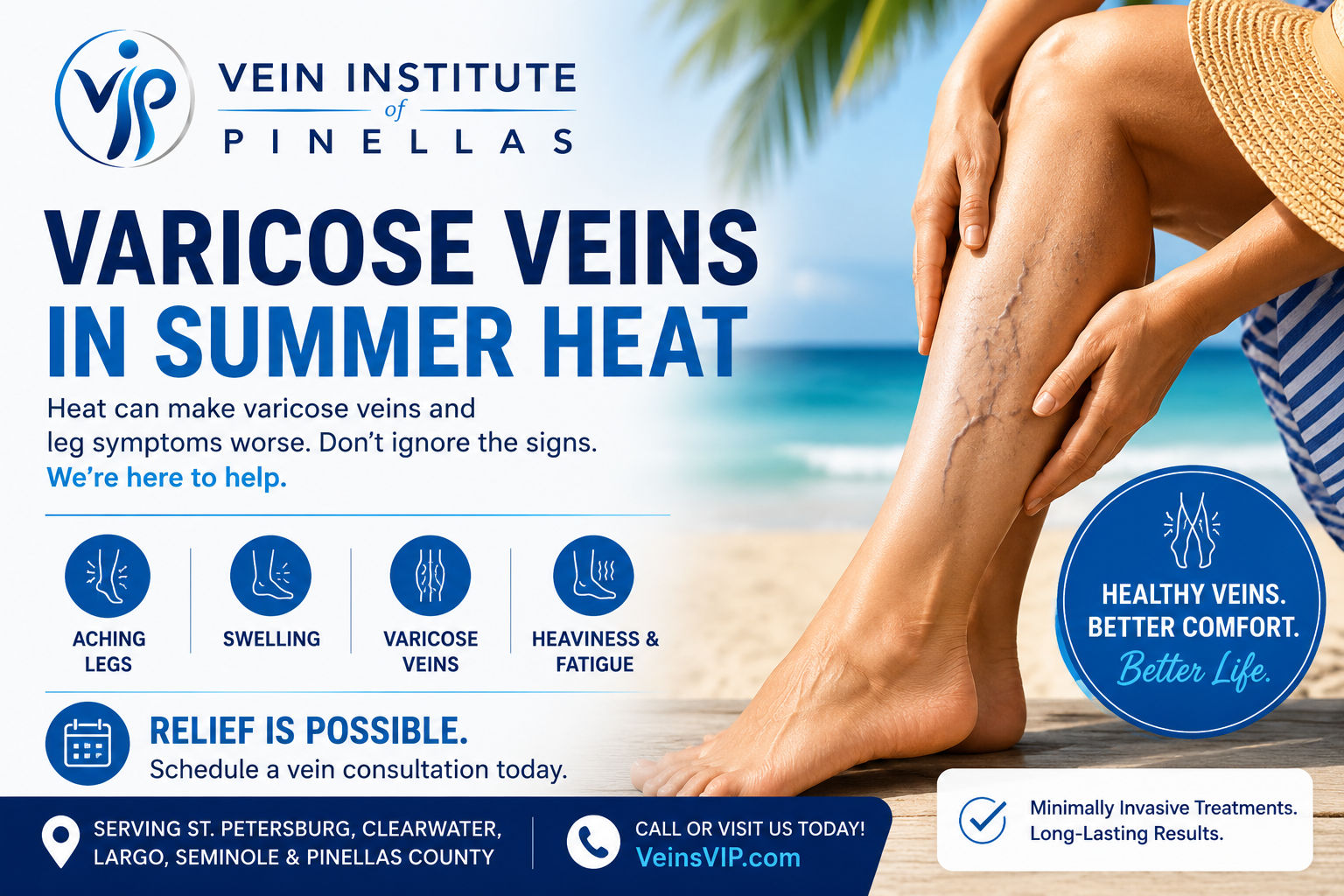
- Bulging or twisted varicose veins
- Skin discoloration near the ankles
- Dry, irritated, or leathery-looking skin
- Restless or uncomfortable legs
- Slow-healing sores near the ankles
Cleveland Clinic reports that CVI symptoms can include lower-leg and ankle edema, particularly after standing or toward the end of the day, along with aching, heaviness, cramping, skin changes, and varicose veins.
You do not need to have visible varicose veins to have a circulation problem.
Some patients experience symptoms of venous disease before prominent veins become visible.
Why Are My Ankles More Swollen at the End of the Day?
This is a particularly important pattern.
If your ankles appear relatively normal in the morning but become swollen after working, shopping, standing, or sitting for several hours, venous circulation may be one possible explanation.
Being upright increases the effect of gravity on blood in the legs.
Healthy vein valves help prevent blood from falling backward. When those valves are not functioning efficiently, pressure can gradually build inside the veins.
Fluid can then move into the surrounding tissues, producing swelling.
People sometimes notice:
- Deep marks from socks
- Shoes becoming tight later in the day
- Puffy ankles
- Heavier-feeling legs
- Symptoms improving after lying down or elevating the legs
The National Heart, Lung, and Blood Institute notes that symptoms associated with varicose veins—including swelling, aching, and heaviness—may worsen after prolonged sitting or standing and may improve when a person lies down or elevates their feet.
While this pattern does not prove that venous disease is present, it is useful information to share with your healthcare provider.
Is Swelling in One Leg Different From Swelling in Both Legs?
Yes, and the distinction can be medically important.
Chronic venous disease can affect one or both legs. However, new or sudden swelling affecting only one leg deserves prompt medical attention, particularly when it occurs with pain, tenderness, warmth, or redness.
Those symptoms can sometimes occur with a deep vein thrombosis, or DVT, which is a blood clot located in a deep vein.
The CDC lists swelling, pain or tenderness, warmth, and redness among possible symptoms of DVT.
A DVT cannot be diagnosed based on symptoms alone. A healthcare professional may need to perform diagnostic testing, commonly including an ultrasound.
If you develop sudden unexplained swelling in one leg, especially with pain, warmth, or redness, contact a healthcare provider promptly rather than waiting to see if the symptoms disappear.
When Leg Swelling Can Be an Emergency
Most cases of chronic leg swelling are not emergencies, but certain symptoms require immediate attention.
A blood clot in a deep leg vein can sometimes break loose and travel to the lungs. This is called a pulmonary embolism, or PE.
Seek emergency medical attention if leg swelling is accompanied by symptoms such as:
- Sudden shortness of breath
- Difficulty breathing
- Chest pain, especially pain that worsens with breathing
- Coughing up blood
- Rapid heartbeat
- Lightheadedness
- Fainting or sudden collapse
These symptoms can be associated with pulmonary embolism and require immediate medical evaluation.
Can Varicose Veins Cause Swollen Legs?
Yes.
Varicose veins are more than a cosmetic issue for some patients.
They develop when veins become enlarged and abnormal, often because the vein walls or valves are not functioning normally. Blood can collect inside the affected veins instead of moving upward efficiently.
Varicose veins can be associated with:
- Leg swelling
- Aching
- Heaviness
- Burning
- Itching
- Night cramps
- Skin changes
In more advanced venous disease, patients can develop significant swelling and changes to the skin and tissues of the lower leg.
Visible varicose veins combined with recurring ankle swelling, aching, or heaviness are good reasons to discuss your symptoms with a healthcare professional.
What Happens If Chronic Venous Insufficiency Is Left Untreated?
Venous insufficiency may progress over time.
Early symptoms may be relatively mild, such as occasional swelling, tired legs, or aching after standing.
As venous pressure continues, some patients can develop more significant symptoms.
Possible complications can include:
Persistent swelling
Swelling may become more frequent and eventually remain present for longer periods.
Skin discoloration
The skin around the lower legs and ankles may become reddish-brown or darker.
Skin texture changes
Inflammation and prolonged swelling can cause the skin to become dry, irritated, firm, or leathery.
Venous ulcers
In advanced venous disease, open wounds can develop, particularly near the ankles.
Johns Hopkins Medicine notes that severe swelling associated with chronic venous insufficiency can place pressure on the skin and contribute to the development of venous ulcers.
Early evaluation gives your healthcare provider an opportunity to determine why the swelling is occurring and whether treatment is appropriate.
How Does a Vein Specialist Evaluate Leg Swelling?
Evaluation usually begins with a conversation and physical examination.
Your healthcare provider may ask questions such as:
- When did the swelling begin?
- Is one leg affected or both?
- Is swelling worse in the morning or evening?
- Does standing make it worse?
- Does leg elevation improve it?
- Do you experience aching or heaviness?
- Have you noticed varicose or spider veins?
- Have you ever had a blood clot?
- Have you had previous leg surgery or injuries?
- What medications are you taking?
- Do other medical conditions affect your circulation?
If venous insufficiency is suspected, a provider may recommend a duplex ultrasound.
This noninvasive imaging study allows healthcare professionals to examine the veins and evaluate the direction and movement of blood through them.
Johns Hopkins identifies duplex ultrasound as a diagnostic test used to examine both the structure of the veins and blood flow when evaluating chronic venous insufficiency.
Testing helps determine whether abnormal blood flow or venous reflux is contributing to your symptoms.
How Is Vein-Related Leg Swelling Treated?
Treatment depends on what is causing the swelling and how advanced the condition is.
Not every person with leg swelling needs a vein procedure.
A treatment plan may include conservative measures, medical management, treatment of another underlying condition, or minimally invasive vein treatment when appropriate.
Leg elevation
Elevating your legs can reduce pressure and help fluid move away from the lower extremities.
Regular movement
Walking activates the calf muscles and helps support venous circulation.
If you work at a desk, travel frequently, or remain seated for prolonged periods, taking regular movement breaks can be helpful.
Avoiding prolonged standing or sitting
Changing position regularly can help reduce the amount of time blood remains pooled in the legs.
Compression therapy
Some patients benefit from properly fitted compression stockings. Compression can help support circulation and reduce swelling.
Compression therapy is not appropriate for every patient, however, particularly when certain arterial circulation problems are present. Ask your healthcare professional whether compression is appropriate for you.
Treating the underlying abnormal vein
When testing identifies significant venous reflux and conservative measures are not sufficient, a vein specialist may discuss minimally invasive treatment options.
Depending on the patient’s condition, treatment may include techniques such as endovenous thermal ablation, sclerotherapy, or other therapies designed to close abnormal veins and redirect blood through healthier circulation pathways.
The appropriate treatment depends on the individual’s anatomy, symptoms, ultrasound results, medical history, and other health factors.
Can I Prevent My Legs From Swelling?
Not all causes of leg swelling are preventable, but everyday habits can help support healthy circulation.
Consider:
- Walking regularly
- Avoiding sitting continuously for long periods
- Taking movement breaks during long trips
- Flexing your ankles and calves while sitting
- Maintaining a healthy weight
- Staying physically active
- Elevating your legs when appropriate
- Limiting excessive dietary sodium when recommended by your healthcare provider
- Following your provider’s recommendations regarding compression stockings
These steps may help with symptoms, but persistent swelling should not simply be managed at home without determining the underlying cause.
When Should I See a Vein Specialist for Leg Swelling?
Consider scheduling an evaluation if you experience recurring leg or ankle swelling, especially when it occurs along with:
- Varicose veins
- Spider veins
- Aching legs
- Heavy or tired legs
- Burning or itching
- Nighttime cramps
- Skin discoloration
- Swelling that becomes worse throughout the day
- Symptoms that interfere with walking, work, exercise, or daily activities
You should also talk to a healthcare provider when swelling continues without an obvious explanation.
Leg swelling is a symptom—not a diagnosis.
The goal of an evaluation is to determine what is causing the swelling and whether your veins are contributing to the problem.
Frequently Asked Questions About Leg Swelling
Why do my legs swell after standing all day?
Prolonged standing allows gravity to increase pressure in the veins of the lower legs. In people with venous insufficiency, weakened or damaged valves may allow blood to pool, making ankle and lower-leg swelling more noticeable later in the day.
Why do my socks leave deep marks around my ankles?
Sock marks can occur when fluid accumulates around the ankles. Occasional marks do not necessarily indicate vein disease, but recurring swelling, particularly with aching, heaviness, varicose veins, or skin changes, should be discussed with a healthcare professional.
Can poor circulation cause swollen ankles?
Yes. Venous insufficiency is one circulation problem that can cause swelling because blood does not return efficiently from the legs toward the heart. However, swelling has many potential causes, so a medical evaluation is important.
Does walking help swollen legs?
Walking activates the calf muscles, which help push venous blood upward. Regular movement may help support circulation, particularly for people who sit or stand for extended periods. The appropriate activity level depends on your overall health.
Are swollen legs always caused by vein disease?
No. Leg swelling may result from many conditions, including injury, medications, prolonged inactivity, pregnancy, lymphedema, blood clots, or heart, kidney, liver, and other medical conditions. Determining the cause is important before beginning treatment.
Can you have venous insufficiency without visible varicose veins?
Yes. Some patients experience swelling, aching, heaviness, or other symptoms without prominent varicose veins. Diagnostic ultrasound can help determine whether venous reflux is present.
What kind of doctor should I see for persistent leg swelling?
Your primary care provider can help evaluate unexplained swelling and determine whether additional testing or specialist care is appropriate. When symptoms suggest venous disease, evaluation by a vein or vascular specialist may be recommended.
Don’t Ignore Persistent Leg Swelling
An occasional swollen ankle after a long day does not necessarily mean you have vein disease.
However, recurring leg swelling deserves attention, particularly when it becomes progressively worse, appears regularly at the end of the day, or occurs with aching, heaviness, visible veins, skin discoloration, or other changes.
Chronic venous insufficiency is one possible cause.
The good news is that modern diagnostic testing can help identify abnormal blood flow, and many vein conditions can be managed with conservative measures or minimally invasive treatments when clinically appropriate.
If you are experiencing persistent swollen legs, swollen ankles, heaviness, aching, varicose veins, or other symptoms of possible venous disease, consider scheduling a vein evaluation with Vein Institute of Pinellas.
Our team can evaluate your symptoms, determine whether venous insufficiency may be contributing to your leg swelling, and discuss appropriate treatment options based on your individual needs.
Schedule your vein evaluation today and take the first step toward healthier, more comfortable legs.
This article is intended for general educational purposes and is not a substitute for professional medical advice, diagnosis, or treatment. Seek prompt medical care for sudden or unexplained one-sided leg swelling. Call 911 or seek emergency care for chest pain, sudden difficulty breathing, coughing up blood, fainting, or other symptoms that may indicate a pulmonary embolism.

Leave A Comment