
Can Vein Disease Cause Restless Legs? Understanding the Connection
If you regularly experience an uncomfortable urge to move your legs at night, crawling or tingling sensations, leg heaviness, aching, or nighttime cramping, you may wonder whether poor circulation or vein disease could be responsible.
Many people often ask, Can Vein Disease Cause Restless Legs? It’s crucial to explore this question further.
The answer is that vein disease may contribute to restless-leg symptoms in some people, especially when chronic venous insufficiency or venous reflux is present. However, restless legs can have many possible causes, and not everyone with Restless Legs Syndrome has a vein problem.
Patients frequently inquire, Can Vein Disease Cause Restless Legs? Understanding the connection can help in managing symptoms.
Understanding the difference is important because symptoms that seem neurological may sometimes overlap with symptoms caused by unhealthy leg veins.
At the Vein Institute of Pinellas, evaluating the circulation in your legs can help determine whether venous disease may be contributing to symptoms such as restlessness, aching, swelling, heaviness, or nighttime leg discomfort.
When discussing symptoms, many wonder, Can Vein Disease Cause Restless Legs? This question is becoming more relevant in today’s society.
What Are Restless Legs?
Restless Legs Syndrome, also known as RLS or Willis-Ekbom disease, is a neurological condition characterized by an uncomfortable urge to move the legs.
For those experiencing symptoms, it is essential to ask, Can Vein Disease Cause Restless Legs? This inquiry can lead to appropriate evaluations.
Symptoms usually become more noticeable while a person is resting, particularly in the evening or at night. Walking, stretching, or moving the legs often provides temporary relief.
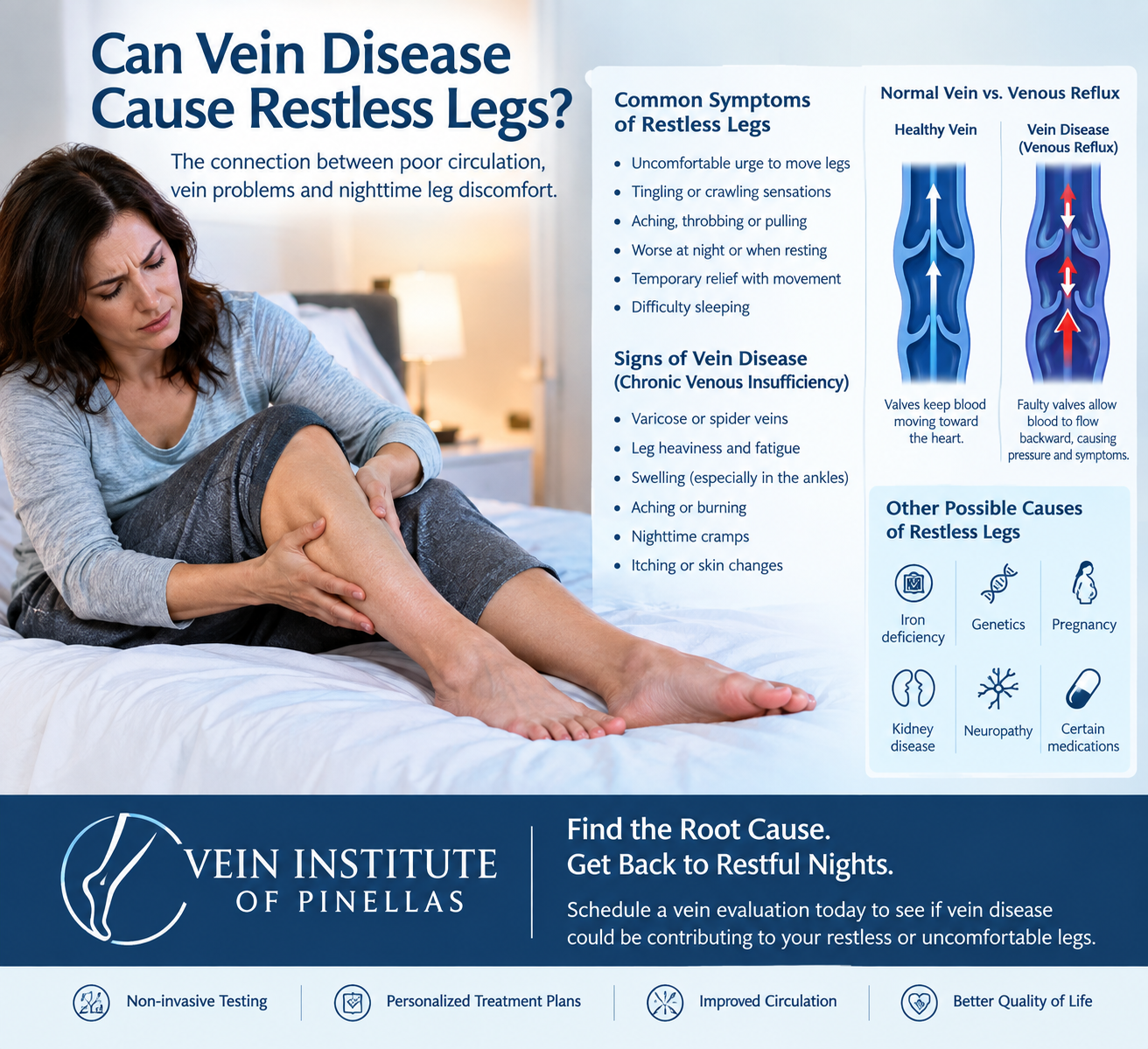
People describe the sensation in many different ways, including:
-
Crawling sensations
-
Tingling
-
Pulling
-
Throbbing
-
Aching
-
Itching deep inside the legs
-
An uncomfortable need to move
-
Leg restlessness while sitting
-
Difficulty keeping the legs still
-
Discomfort when lying in bed
Ultimately, understanding Can Vein Disease Cause Restless Legs? can guide you to seek the right medical help.
Because symptoms frequently occur at night, restless legs can interfere with falling asleep or staying asleep.
Over time, disrupted sleep can cause daytime fatigue, difficulty concentrating, irritability, and reduced quality of life.
However, similar sensations can also occur with chronic venous insufficiency, varicose veins, neuropathy, muscle conditions, and other health problems.
That is why identifying the underlying cause of leg symptoms is so important.
Can Vein Disease Cause Restless Legs?
In conclusion, many patients are left wondering, Can Vein Disease Cause Restless Legs? It’s a question worth exploring.
There appears to be an association between venous disease and restless-leg symptoms in some patients.
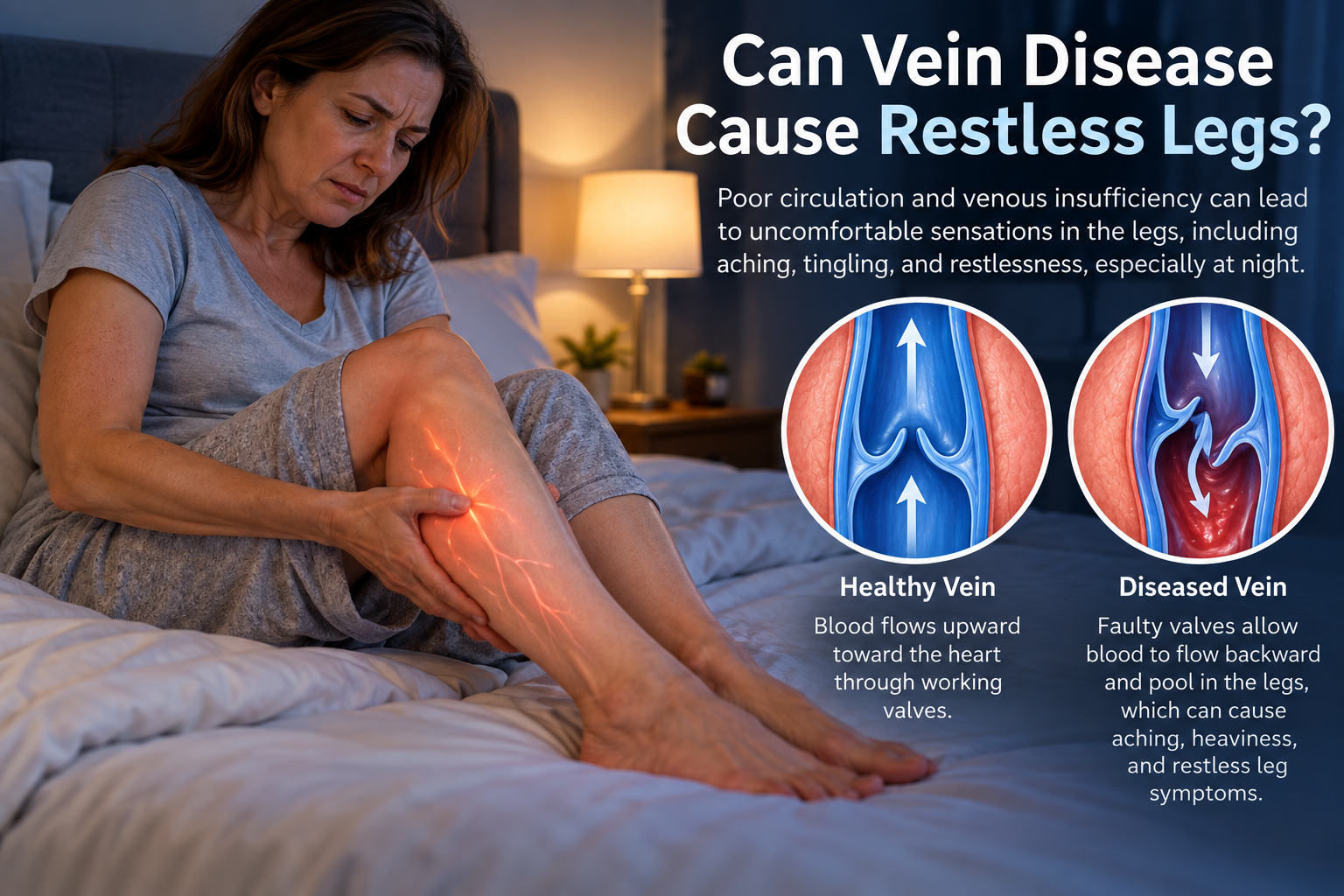
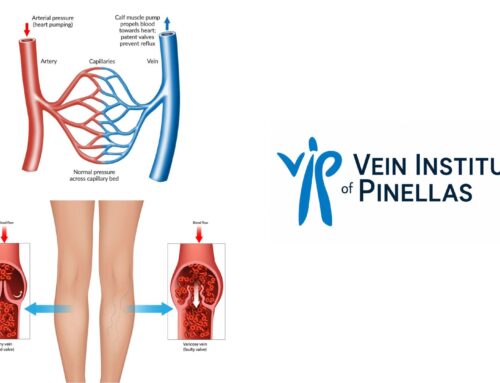
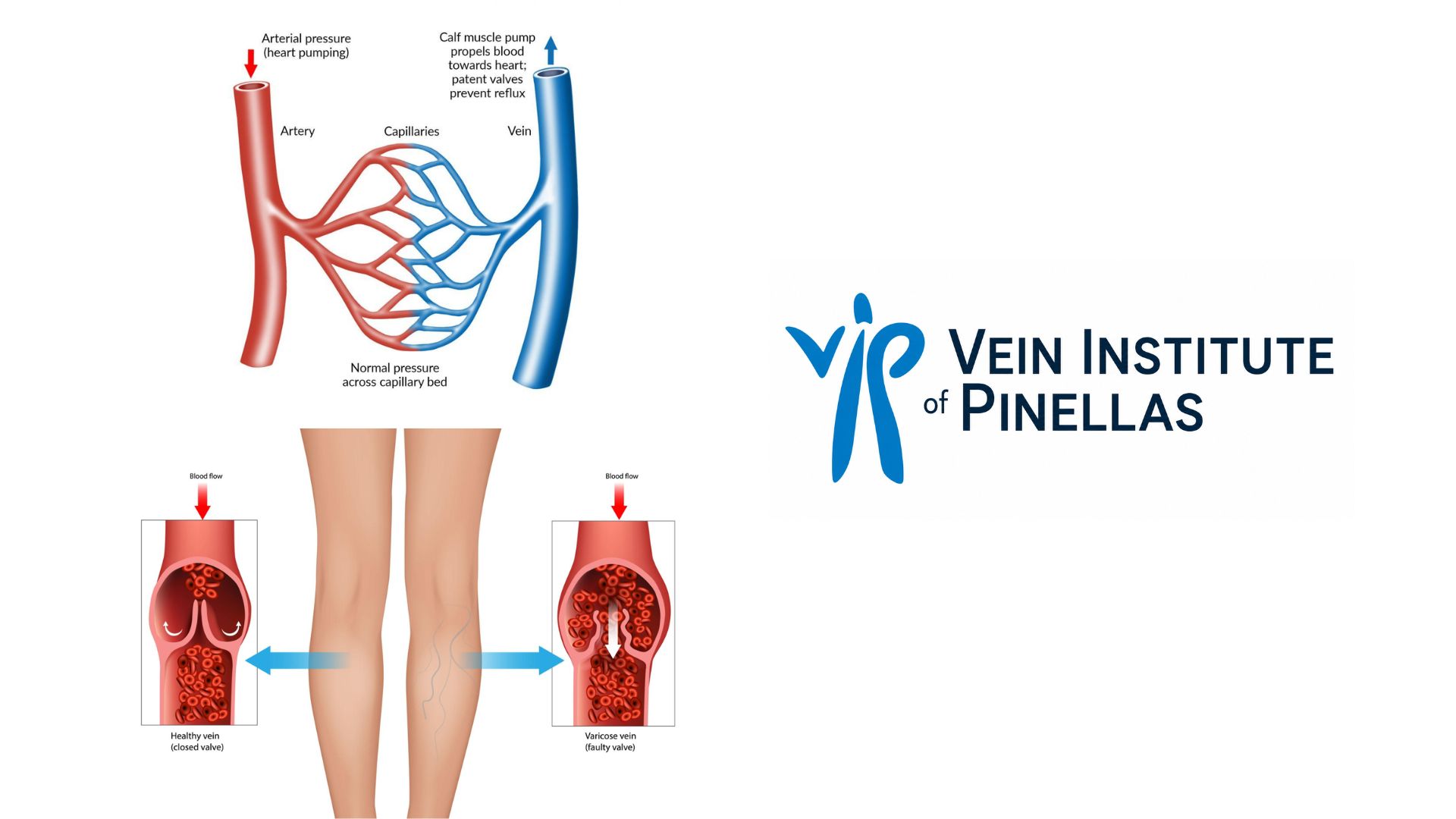
Vein disease occurs when the valves inside the veins of the legs do not function properly. These valves normally help blood travel upward toward the heart.
When the valves become weakened or damaged, blood can flow backward and collect within the veins.
This condition is known as venous reflux.
Over time, increased pressure within the veins can contribute to symptoms such as:
-
Aching legs
-
Leg heaviness
-
Swelling
-
Burning sensations
-
Tingling
-
Nighttime cramps
-
Itching
-
Fatigue in the legs
-
Varicose veins
-
Restlessness or difficulty getting comfortable
Several studies have identified an association between venous reflux or chronic venous disease and restless-leg symptoms.
Consequently, one might ask, Can Vein Disease Cause Restless Legs? Understanding this might be the key to relief.
A systematic review published in 2025 examined research involving chronic venous insufficiency, superficial venous reflux, varicose veins, and Restless Legs Syndrome. Researchers found evidence of an association between RLS symptoms and several types of venous disease.
Importantly, this does not mean that every case of Restless Legs Syndrome is caused by vein disease.
True RLS can have neurological, genetic, metabolic, medication-related, and other causes.
But if restless-leg symptoms occur together with swelling, varicose veins, heaviness, aching, or other signs of poor venous circulation, a vein evaluation may be appropriate.
Why Can Venous Insufficiency Make Your Legs Feel Restless?
To understand the possible connection, it helps to understand how blood normally circulates through the legs.
This can lead to the larger question: Can Vein Disease Cause Restless Legs? Knowing the answer may change treatment approaches.
Your arteries carry oxygen-rich blood from the heart to your legs. Your veins then carry blood back toward the heart.
Because the blood in your legs must travel upward against gravity, your veins contain small one-way valves.
These valves open to allow blood to move upward and close to prevent it from flowing backward.
When the valves stop working efficiently, blood can collect in the lower legs.
This condition can increase pressure inside the veins and surrounding tissues.
The resulting symptoms may include pressure, swelling, aching, burning, itching, tingling, and a feeling of restlessness.
People often describe these sensations as an inability to find a comfortable position for their legs.
Moving or walking activates the calf muscles, which help push blood upward toward the heart. This may temporarily improve venous circulation and reduce discomfort.
Interestingly, movement also temporarily improves classic Restless Legs Syndrome.
That similarity is one reason venous symptoms and neurological RLS can sometimes be difficult to distinguish without a medical evaluation.
Restless Legs vs. Venous Insufficiency
Although the conditions may overlap, there are some differences that may help identify the source of your symptoms.
Symptoms More Commonly Associated With Restless Legs Syndrome
Classic RLS typically includes:
-
A strong urge to move the legs
-
Symptoms beginning or becoming worse while resting
-
Temporary relief through movement
-
Symptoms that are worse during the evening or nighttime
-
Difficulty sleeping because of leg discomfort
Some people have RLS without visible signs of vein disease.
Symptoms Suggesting Venous Insufficiency
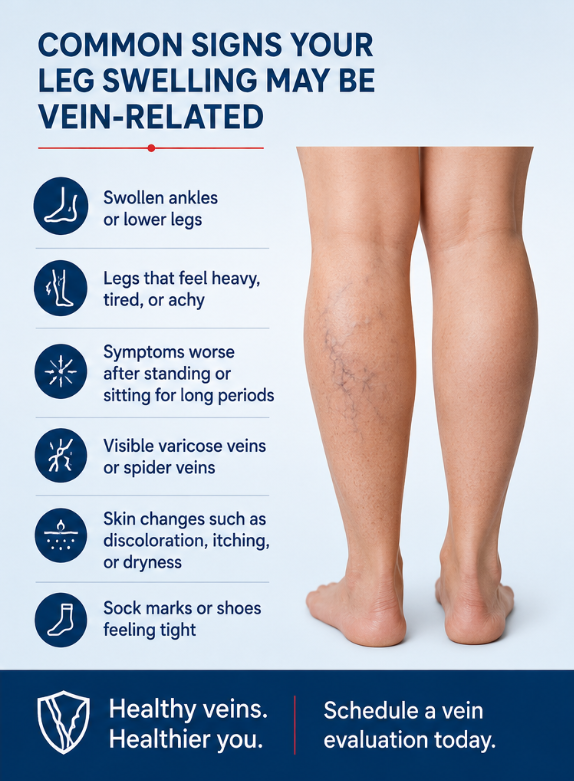
Venous disease may be more likely when restless or uncomfortable legs occur together with:
-
Varicose veins
-
Spider veins
-
Swollen ankles
-
Lower-leg swelling
-
Heavy or tired legs
-
Aching after standing
-
Burning or throbbing
Therefore, you may begin to wonder, Can Vein Disease Cause Restless Legs? This connection could be significant.
-
Nighttime leg cramps
-
Skin discoloration around the ankles
-
Itching of the lower legs
-
Symptoms that become worse after prolonged standing or sitting
Patients may have both conditions simultaneously.
A proper evaluation can help identify which factors are contributing to your symptoms.
Are Varicose Veins Connected to Restless Legs?
Varicose veins are enlarged veins that develop when faulty vein valves allow blood to collect instead of flowing efficiently toward the heart.
They are one visible sign of underlying venous disease.
Research has found an association between varicose veins, venous reflux, and symptoms described as restless legs or nighttime cramping.
One observational study involving patients evaluated for venous disease found a significant relationship between abnormal superficial veins and restless-leg or nighttime cramping symptoms.
Other research has shown that patients reporting RLS-type symptoms may have higher rates of superficial venous reflux.
So, the question remains, Can Vein Disease Cause Restless Legs? This ongoing inquiry represents a crucial area of research.
However, varicose veins do not automatically mean a person has Restless Legs Syndrome.
Instead, the symptoms produced by venous disease may sometimes resemble or worsen restless-leg sensations.
What Is Chronic Venous Insufficiency?
Chronic venous insufficiency, or CVI, is a condition in which the veins have difficulty returning blood efficiently from the legs toward the heart.
It usually develops gradually.
In the early stages, symptoms may seem minor. A patient might notice that their legs feel tired or heavy after standing all day.
As the condition progresses, additional symptoms can appear.
Common symptoms of chronic venous insufficiency include:
-
Leg aching
-
Heavy legs
-
Swelling around the ankles
-
Burning
-
Tingling
-
Nighttime cramps
-
Restless sensations
-
Varicose veins
-
Skin itching
-
Skin discoloration
-
Dry or irritated skin
More advanced venous disease may eventually contribute to inflammation, skin changes, or venous ulcers.
Early evaluation can help determine the severity of venous disease and what treatment options may be appropriate.
Why Are Vein Symptoms Often Worse at Night?
Patients frequently tell vein specialists that their legs become more uncomfortable in the evening.
One possible explanation is the cumulative effect of gravity throughout the day.
When you spend hours standing or sitting, blood pressure inside unhealthy leg veins can gradually increase.
By evening, your legs may feel:
-
Heavy
-
Achy
-
Swollen
-
Tired
Thus, understanding if Can Vein Disease Cause Restless Legs? relates to your symptoms can be life-changing.
-
Restless
-
Warm
-
Throbbing
Once you lie down, you may become more aware of those sensations because there are fewer distractions.
Some people find themselves constantly repositioning their legs, stretching, rubbing their calves, or getting out of bed to walk around.
Movement activates the calf muscles and may temporarily improve circulation, which could explain why walking sometimes provides relief.
Other Causes of Restless Legs
Venous disease is only one possible contributor to restless-leg symptoms.
True Restless Legs Syndrome can be associated with several other conditions and factors.
Possible causes or risk factors include:
Iron Deficiency
Low iron levels are one of the most recognized conditions associated with Restless Legs Syndrome.
A physician may recommend blood testing when RLS is suspected.
Genetics
RLS can run in families, especially when symptoms begin earlier in life.
Furthermore, it’s important to clarify: Can Vein Disease Cause Restless Legs? This is a common concern among patients.
Pregnancy
Some women experience restless-leg symptoms during pregnancy, particularly later in pregnancy.
Kidney Disease
Chronic kidney disease can be associated with RLS, particularly when iron deficiency is also present.
Peripheral Neuropathy
Nerve damage can cause burning, tingling, numbness, or uncomfortable sensations that may resemble restless legs.
Certain Medications
Some medications can trigger or worsen RLS symptoms.
Caffeine, Alcohol, and Nicotine
These substances may worsen symptoms in certain people.
Because there are many possible causes, persistent restless-leg symptoms deserve a thorough evaluation.
How Can You Tell Whether Your Restless Legs Are Related to Vein Disease?
Consider whether you experience other symptoms of venous insufficiency.
Lastly, do not hesitate to ask your doctor, Can Vein Disease Cause Restless Legs? This question is essential for your health journey.
For example, ask yourself:
Do your legs swell toward the end of the day?
Do your legs feel heavy after standing?
Do you have visible varicose or spider veins?
Do you experience nighttime leg cramps?
Do your legs ache after prolonged sitting or standing?
Do you have burning, itching, or throbbing sensations?
Do your ankles appear swollen in the evening?
Have you noticed discoloration around your lower legs or ankles?
If you answered yes to several of these questions, venous disease may be worth investigating.
A vein specialist can evaluate your symptoms and determine whether abnormal blood flow is present.
How Is Vein Disease Diagnosed?
Vein disease can often be evaluated using a duplex ultrasound.
This noninvasive test allows a vein specialist to examine the veins inside your legs and see how blood is flowing through them.
The ultrasound can help identify:
-
Faulty vein valves
-
Venous reflux
-
Abnormal blood flow
-
Enlarged veins
-
Areas where blood may be pooling
Testing is especially helpful because venous disease can exist even when large varicose veins are not visible.
Someone may have significant venous reflux while having relatively normal-looking legs.
Can Treating Vein Disease Improve Restless-Leg Symptoms?
Some published studies have reported improvements in restless-leg symptoms following treatment of underlying venous reflux.
For example, research has evaluated treatments such as vein ablation and ultrasound-guided sclerotherapy in patients who had both venous abnormalities and RLS-type symptoms.
Some patients experienced significant symptom improvement following treatment.
A recent systematic review also concluded that research suggests a possible benefit from addressing underlying venous disease in certain patients with restless-leg symptoms.
However, researchers emphasize that more high-quality studies are needed.
Many people have started to ask, Can Vein Disease Cause Restless Legs? This inquiry is becoming increasingly prevalent.
Vein treatment therefore should not be considered a universal treatment for Restless Legs Syndrome.
Instead, treatment may be appropriate when testing confirms that venous disease is actually present and a vein specialist determines that intervention is medically appropriate.
What Treatments Are Available for Venous Disease?
Treatment depends on the severity and location of the abnormal veins.
Modern vein treatment is frequently performed using minimally invasive techniques.
Depending on your individual condition, treatment options may include:
Compression Therapy
Medical compression stockings can help support circulation and reduce swelling in some patients.
Lifestyle Changes
Walking, exercise, weight management, leg elevation, and avoiding prolonged periods of standing or sitting may help reduce venous symptoms.
Endovenous Ablation
Endovenous ablation uses controlled energy to close an unhealthy vein.
Blood naturally redirects through healthier veins.
Sclerotherapy
During sclerotherapy, medication is injected into an abnormal vein, causing it to close gradually.
Other Minimally Invasive Procedures
Additional treatments may be recommended depending on the veins involved and the severity of the condition.
A vein specialist can determine which approach is appropriate after examining your circulation.
When Should You See a Vein Specialist?
Occasional leg discomfort after an unusually active day is common.
However, recurring or worsening symptoms deserve attention.
Consider scheduling a vein evaluation if you frequently experience:
-
Restless legs at night
When evaluating symptoms, consider the question: Can Vein Disease Cause Restless Legs? It could be vital for diagnosis.
-
Leg heaviness
-
Swollen legs or ankles
-
Nighttime leg cramps
-
Varicose veins
-
Burning or tingling
-
Aching after standing
-
Throbbing sensations
-
Skin discoloration
-
Persistent itching around the lower legs
A vein evaluation may identify circulation problems that have gone unnoticed.
Restless Legs May Be More Than a Sleep Problem
Many people assume nighttime leg discomfort is simply caused by aging, fatigue, or poor sleep.
Sometimes, however, the symptoms may be associated with an underlying circulation problem.
Restless Legs Syndrome itself is a neurological condition, but chronic venous insufficiency can produce symptoms that overlap with RLS.
When uncomfortable legs occur along with swelling, aching, heaviness, varicose veins, or nighttime cramping, evaluating the veins may provide important information about the source of the problem.
Frequently Asked Questions About Restless Legs and Vein Disease
Consequently, the inquiry, Can Vein Disease Cause Restless Legs? is critical for understanding your condition.
Can poor circulation cause restless legs?
Circulation problems, particularly chronic venous insufficiency, can produce aching, heaviness, swelling, burning, tingling, cramping, and restless sensations in the legs. Research has identified an association between venous reflux and RLS-type symptoms in some patients. However, poor circulation is not the cause of every case of Restless Legs Syndrome.
Can varicose veins make your legs restless at night?
Yes, venous disease associated with varicose veins can cause symptoms including aching, heaviness, cramping, throbbing, and restlessness. Symptoms may become particularly noticeable after a full day of standing or sitting.
Can venous insufficiency cause nighttime leg cramps?
Nighttime leg cramping is a recognized symptom reported by some people with chronic venous insufficiency.
Why do my legs feel uncomfortable when I lie down?
Several conditions can cause nighttime leg discomfort, including RLS, venous insufficiency, neuropathy, muscle cramping, iron deficiency, and medication side effects. An evaluation can help determine the underlying cause.
Does walking help venous leg discomfort?
Ultimately, if you experience discomfort, ask yourself, Can Vein Disease Cause Restless Legs? This question is crucial for your health.
Walking activates the calf muscles, which help move blood from the legs toward the heart. Regular walking may therefore help support venous circulation.
Will treating varicose veins cure Restless Legs Syndrome?
Not necessarily. If venous disease contributes to your symptoms, treating the abnormal veins may improve certain symptoms. However, RLS can have neurological and other causes, so vein treatment should not be considered a cure for all cases of RLS.
Schedule a Vein Evaluation at the Vein Institute of Pinellas
If restless legs are keeping you awake at night, the problem may deserve a closer look.
Especially when restlessness occurs together with varicose veins, leg swelling, heaviness, aching, burning, or nighttime cramps, chronic venous insufficiency may be contributing to your symptoms.
When seeking help, it’s important to address, Can Vein Disease Cause Restless Legs? This could assist in your treatment plan.
The Vein Institute of Pinellas can evaluate the circulation in your legs and determine whether venous reflux or another vein condition may be present.
Finally, if restless legs are a concern, reflect on the question: Can Vein Disease Cause Restless Legs? This could lead to significant findings.
Finding the underlying cause is the first step toward determining the appropriate treatment.
Schedule a vein consultation with the Vein Institute of Pinellas to learn whether vein disease could be contributing to your restless or uncomfortable legs.
727-210-8391

Leave A Comment